
-
Naga
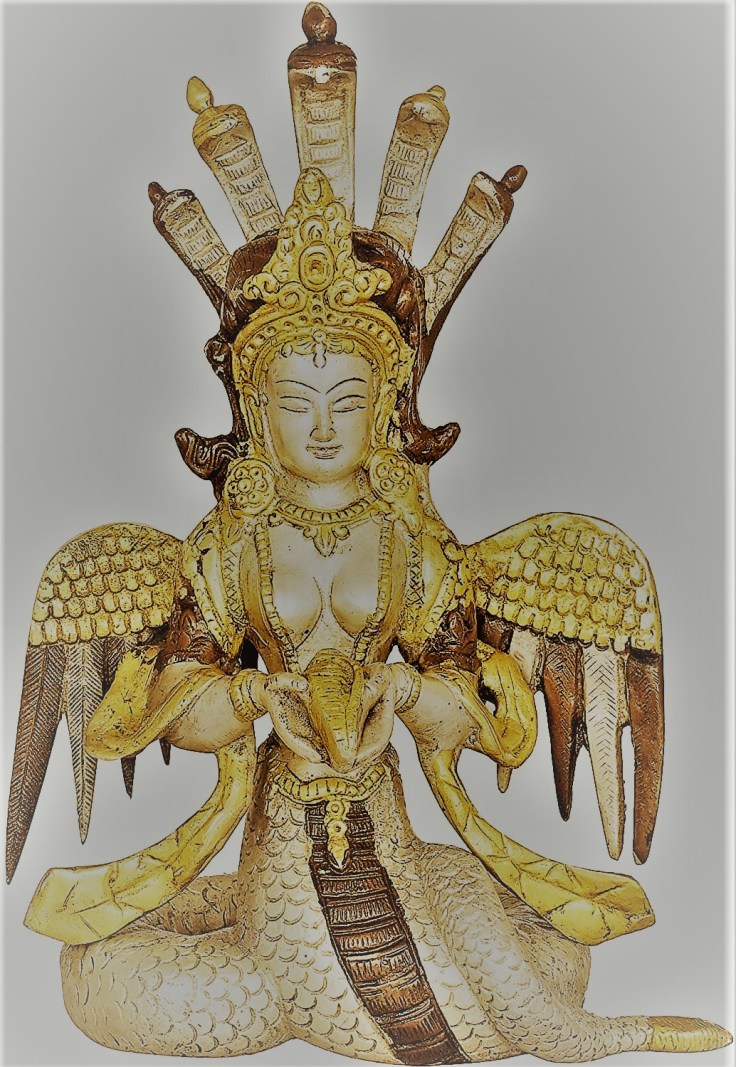
The Naga is a half-human, half serpent creature native to Southeast Asia. Associated strongly with water and underground caverns, Nagas are believed to be guardians of treasure.
Category: Humanoid
History
Naga’s are deemed semi-divine by many Asian cultures, and are seen giving guidance and advice to both gods and the Buddha in different mythologies. They are traditionally believed to reside in an enchanted underworld filled with treasures and gemstones, and are often depicted as guardians of treasure when they venture to the surface. They are also associated with bodies of water such as rivers and oceans, possibly tied to their serpent nature.
Traits and Behavior
Nagas are a humanoid species that are approximately 10-12 feet from head to tail. Their upper torso resembles a human in shape and size. Their lower body is that of a serpent, approximately 2-3 times the length of the torso, though some species can be longer. The human half does not typically have unusual skin coloration for a human, but they do often have darker markings resembling birthmarks that correspond to their snake half. Their upper torso can occasionally have scales. The tail design can vary but will often mimic natural snakes from the Naga’s home region. Naga eyes are serpentine, and again will mimic snakes in coloration. Unlike snakes, Nagas do not smell with their tongue.
Nagas are cold-blooded, and therefore prefer to live in warm climates and are diurnal in nature. They live in communities of vary sizes, most often set up in caverns or underground locations. They spend much of the day on the surface, either lounging in the sun or hunting. Nagas are omnivores, but favor meat over vegetation in their diet. They are ambush predators and use their environment to bring down prey for their entire community. While capable of eating meat raw, they prefer to cook it, often in a communal fire in their community center. A Naga can eat their entire body weight in food, then typically can go weeks without needing to eat again.
Naga children are hatched from eggs, and are often born with brighter colors before they fade to their adult coloration. They reach maturity at 8-10 years of age, and can live as long as 500 years. Baby Naga often have trouble coordinating their bodies as infants, and are generally carried exclusively by their family until a few months old at least, when their spines can support their weight. Children are raised communally, and may spend great lengths of time in groups of children their own age rather than their nuclear family.
Naga have a set of fangs and a mouth of mostly sharpened canine teeth. The majority of species are venomous, and a single bite can be lethal. They are fiercely territorial, and will defend their hunting areas and the entrances to their underground caves to the death. They often consider the waters that run through their territory as exclusively theirs, and therefore greatly resent any other settlements along it, particularly if these settlements cause any pollution or damage to the water flow. Naga are talented swimmers, but do not live in the water and they cannot stay submerged for long periods of time.
Naga are especially fond of gemstones, and often collect them for clothing, jewelry and decorating their homes. They spend a great deal of time carving and polishing the stones they find into smooth orbs, and are particularly fond of gems that are multi-colored or iridescent. Naga often decorate themselves in a large volume of different gems and jewels in a variety of colors and sizes. Most of their jewelry is cast in wood or stone rather than metal.
Nagas can occasionally mesmerize their prey or opponents using direct eye contact. They may use this in hunting, or in fighting, but it rarely works on other Naga.
Naga communicate in a complex language that sounds similar to hissing, and can speak to snakes or other reptiles in this tongue. They are capable of learning human languages, but due to their fangs and vocal cord structure often struggle with soft consonants. They are not particularly interested in humans but are fond of jewelry and other crafts that utilize many colors. They are often willing to trade their gemstones for silks or paintings, as they do not always have the resources to make these items themselves. Many Naga wear sari-styled tops over their human half.
Besides their natural speed, and their venomous fangs, Naga use a variety of weapons if they need to fight or defend. The most common is a spear, often made using their own venom on the tip. They may use human weapons suck as knives or swords, but rarely make them themselves.
Weaknesses
Naga are sensitive to the cold and will struggle to function if they are cold for long periods of time. While talented swimmers, they often lose a large amount of body heat in the water and cannot stay submerged for long periods of time without health issues. They are more prone to frost bite and skin damage than other species if exposed to below freezing temperatures.
Naga are fierce defenders of their territory, and will fight to the death rather than abandon their homes. It is better to leave the territory over fighting if the situation arises. Naga are loyal to a fault, and if you are able to befriend one they will often consider you part of their community and therefore under their protection.
Naga are suspicious of and opposed to any flight capable species, and see any bird-creatures as interlopers in their territories. Naga will fight them on sight.
-
Fruit Dragons
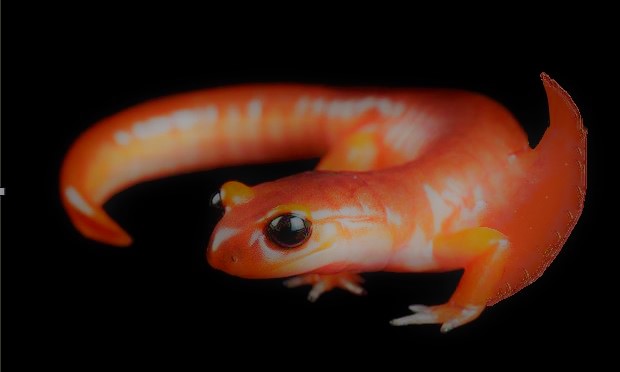
Fruit dragons, one of the smaller dragon species, are peaceful wyverns who live in orchards and forests. Due to their shy nature, sightings are extremely rare.
Category: Dragon/Forest
History
While their larger cousins are known for their fierce nature, treasure hoarding or immense wisdom, fruit dragons are a little-known species that rarely feature in any legends. A handful of old legends feature them as guides, leading heroes and adventurers to bountiful lands full of good food and magical promise. They are occasionally found living in sprite communities or in dryad groves.
Traits and Behavior
Fruit dragons range in size between 1/2 inch to a foot in length from snout to tail. They have four limbs, two wings and two legs, and a long tail often used to cling to branches. They have incredibly detailed camouflage, which will resemble the fruit tree or vines the dragons reside in. They often have sharp talons for climbing, and sharp teeth. Some species are venemous.
While winged, they cannot fly to great heights or for long periods of time, and typically glide from branch to branch. They generally live in tall trees, hiding amongst the foliage and building nests in the branches. Some will choose to live within sprite communities. Some will allow themselves to be ridden if they are large enough.
Fruit dragons are a social species that live in large groups, not just limited to family. A colony of dragons can have as many as 500 members, depending on local resources. They can often understand human speech, but communicate with each other in a variety of chirps and trills.
Fruit dragons are omnivores, and primarily eat fruit and flower nectar. Some will eat nuts or seeds as well. While they are not directly magical, their presence is known to improve the health of the plants they live near, hence their presence in magical communities or dryad groves. Fruit dragons hibernate in winter, as do many forest creatures, and emerge at the first bloom of spring.
Fruit dragons are not terribly territorial; they are more likely to abandon an area if a threat is nearby, and can live happily in mixed groups if their trust is earned. Their only aggressive behavior is at the direct threat against their eggs or hatchlings. at which point they will scratch or bite any attackers, focusing on the eyes. Often, the oldest of their colony will attack while the others carry away their hatchlings and eggs. Unlike their larger cousins, fruit dragons cannot breathe fire. In venomous species a single bite will cause nausea and dizziness; several bites can be lethal. Venom is most common in tropical species.
Fruit dragons have several natural predators. Besides larger birds and cats, goblins are known to eat fruit dragon eggs. The largest threat, however, is the cold. Fruit dragons are cold blooded and cannot handle freezing temperatures. In the daylight, they bask in the sun for hours, and at night they lay in large piles to retain heat. If a traveler is alone, and quiet, they may find fruit dragons gathering near their campfire, but they will flee if they realize they’ve been spotted.
Some fruit dragons settle in orchards. Farmers can encourage this by building bee hives, as fruit dragons are fond of honey and nectar, and by allowing for some fruit to rot on the trees as a food sources when fall begins fading to winter. In return, their orchards will flourish. Dragons cannot be kept in captivity alone, as they will die quickly without company and the warmth a colony provides, but they can be cultivated in larger groups if they are allowed to live outdoors and given access to a variety of foods. Despite primarily favoring the fruit that they are camouflaged to match, having a variety of options is necessary for long term health. A healthy fruit dragon can live to 300.
Weaknesses
Fruit dragons require fresh fruit and plenty of sunlight and warmth to remain healthy. Depriving them of these will cause long term health effects. As they are only ever aggressive in the defense of their nests, it is unlikely you will ever face the issue of being threatened by one.
Some fruit dragons may move into a family garden or residence, and they can be a nuisance on personal harvests. the best way to remove them from one’s garden is to find their nest, as they will leave once their home is discovered. Wear a full body covering, such as a beekeeper’s uniform, to avoid being harmed if there are hatchlings or eggs within the nest. Fruit dragons have been known to abandon older hatchlings if scared off, so to avoid this proceed slowly; if they have begun to attack, wait until they cease and flee before proceeding to confirm they have not retreated further.
-
Lake Superior
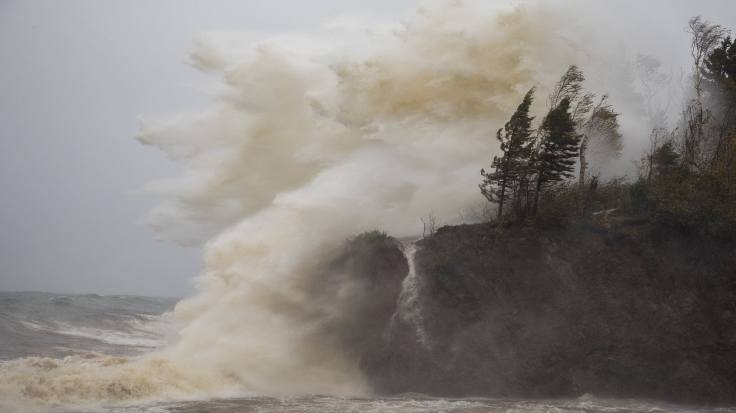
There are many bodies of water believed to contain a supernatural creature. Loch Ness and Nessie, the Kraken in the seas. Charybdis and Scylla of the Mediterranean. But Lake Superior is not one of these cases.
Lake Superior is the creature.
History
There have been thousands of shipwrecks in the Great Lakes chain in North America. An estimated 550 or more are believed to lie undiscovered in Lake Superior, primarily along a stretch of coastline called Shipwreck Coast. Harsh northern winds and frequent poor weather in the region is blamed for the deadly conditions. Crowded shipping lanes are also a culprit, particularly in the area’s heyday in the late 1800s. Ships often collided with each other, and in the freezing waters the cheap steel hulls cracked under the pressure.
Due to the lake’s unique properties, and out of respect for the dead, the shipwrecks are left where they sank rather than brought to the surface when discovered. Scuba divers often explore the bottom of the lake searching for lost ships. Some days, observers have seen ghostly ships sailing on the surface, believed to be the undiscovered wrecks still patrolling the waters.
Traits
Lake Superior is the third largest lake in the world, and is over 1300 feet deep. It is not technically affected by the tides, but it does have similar movements twice daily. The lake is cold, often just below freezing. Portions of the lake will freeze over, but its immense size means that the entire surface does not. The waters that enter the lake remain there for over 190 years before making their way through other rivers and channels elsewhere.
The lake’s cold grip does not let go of those that die in its’ waters. Bodies found in Lake Superior do not decay, as the cold water prevents the process of decomposition and the gases that typically bloat a body do not form. The remains of the sailors that drowned can still be found near the ships they once sailed. The ships and crew are often seem attempting to complete their voyages when the moon is high, or at the edges of a storm. Whether physically or metaphysically, the lake does not release the dead.
The most famous wreck is that of the Edmund Fitzgerald, which in 1975, was taken down by waves of over 25 feet tall and dragged to the bottom in two pieces. The destruction was so fast the crew hardly had time to react, and 29 crewmen died that night. None of their bodies have been recovered, and still reside on the lake’s bottom.
The lake is believed to be home for some sea creatures, some resembling large fish or serpents, or occasionally sharks. But the most dangerous part of Lake Superior is the lake itself; the huge waves and deep, cold waters are the biggest threat you will face in the area.
Weaknesses
This is not an enemy to be defeated, or a threat to be fought. The way to remain safe from the lake is to not drown in it. The lake does not release the dead. If you must enter the waters, either swimming or on a boat, ensure you go during fair weather, and avoid Shipwreck Coast.
-
Sprites (Common)
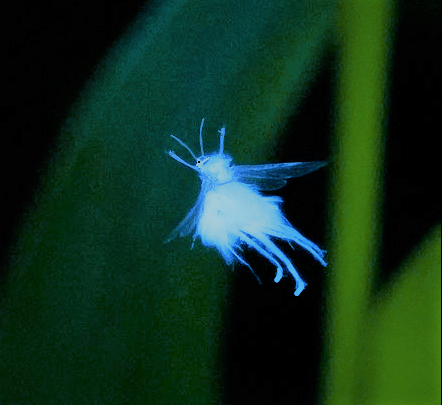
Sprites are a mischievous creature related to elves and fairies. While small, they can be vicious if crossed.
Category: Forest
History
Sprites are small and known to be tricksters. Tales of interactions with them typically result in a human offending them in some way, and being cursed with bad fortune or pranks until they are able to make amends or chase off the offending sprites. Despite this, sprites are rarely actively dangerous, preferring petty revenge over actual harm.
Traits and Behavior
Sprites are small, ranging from 1-4 inches tall on average, and their appearance is vaguely humanoid with a number of insect-like traits. They are winged, and occasionally have two sets of arms. Their coloration varies wildly, as their appearance is meant to mimic insect species from a distance. Up close, their faces will have more human-shaped features, though some have additional eyes. They will have hands with 3-5 fingers on at least one set of arms. Their feet are generally more insect life to aid in landing and climbing. Sprites are fast, and have been mistaken for hummingbirds due to their bright coloration and buzzing wings. They are vegetarians, and are especially fond of milk and cream.
Sprites fashion their clothing primarily from leaves and flowers, so their clothing will change depending on local plant life and seasonal changes. They are not seen in winter, and may in fact hibernate. They also occasionally scavenge human items, using fabric scraps, random items or even doll clothes to dress themselves. The gift of clothing from a human will be considered a great insult, however, regardless of material.
Sprites can be awake at all times of day or night, depending, and generally live in large groups, which may include other species of sprites. Their homes will be made of all natural materials and can be mistaken for birds nests or insect hives. Inside, sprites will have furniture, made from natural materials or scavenged human items. They are attracted to shiny items in particular, and will often decorate their homes with sparkly items of all kinds.
Sprites can be easily offended. The most common form of insult is giving gifts. While sprites appreciate gifts of food, especially milk, bread and honey, they do not care for other items like clothing or decorations. It is also insulting to enter their territory without permission, or to touch their plants for any reason. What a sprite considers ‘theirs’ can be unclear, as they may claim a plant that the owner has neglected or that is simply pretty, and there will be little indication that they have claimed it until offense is made. An apology in the form of food can usually calm their tempers.
Sprites enjoy tricking humans with or without an offending moment, so it isn’t always clear if one is the target of a prank or if they have offended the sprites in some way. Apologies in either case are usually effective. Their tricks are usually small and relatively harmless. Tied shoelaces, knotted hair, small items missing or milk going sour are popular pranks.
Sprites also have mild powers of illusion; they most often make you hear the voices of people you know, calling you to get lost in the woods or do something foolish. Their tricks often fall apart if you do not react as they hoped immediately; they have short tempers and will lose patience with a trick without immediate results.
Sprites are considered nature spirits, and have a strong affinity with the woods where they dwell. Some will settle in large gardens, but generally they will avoid settling too close to humans so as to keep their gardens private. A sprite garden will be difficult to identify, as they enjoy allowing plants to grow wildly, but they are very fond of honeysuckle and clover. Sprites do not always live in their gardens, and may travel great distances to maintain them.
Sprites life spans are unknown, but by all appearances they seem to live long lives, perhaps 2-3 centuries. It is unclear if the different types of sprites are truly separate species or if their different appearances are a purely cosmetic difference.
Weaknesses
Sprites cannot stand iron; the touch will cause severe burns, and they often are repulsed from any iron items by several feet. Using iron to protect the entrances of your home can keep them from entering the building. Wearing iron jewelry or ornaments can protect your person. This can be seen as offensive if you have otherwise enjoyed a friendly relationship with the sprites, but it can stop their pranks should you have been their victim.
Protective charms made of rowan wood can also repel them, but they will not cause physical harm. Wearing your clothes inside out can make you immune to any illusions they may attempt, but this is not always effective.
Sprites rarely speak, but if they do they cannot lie, and a promise made by one has to be upheld. They will often twist their words to allow for loopholes, but they are bound to the exact wording. Please be aware, however, that should you break an agreement with a sprite, they will never cease in their torment of you; petty though they are, they have long memories and will not allow a slight to pass.
-
Mothman

A North American creature, the Mothman is a nocturnal creature considered a harbinger of doom and misfortune.
Category: Nocturnal
History
First reported on in 1966, Mothman is a creature shrouded in mystery. Sightings of the creature are often a sign of bad things to come, as its’ appearance has been tied to a number of disasters, including the collapse of the Silver bridge, and a bombing of an apartment building in Russia. The creature itself is not believed to have directly caused the events; Mothman’s appearance can be considered an omen of things to come.
Traits and Behavior
Mothman is a humanoid creature with a wingspan ranging from 7-10 feet wide. Its’ body is all black, covered in feathers and has glowing red eyes. Some reports indicate it has talons on its hind legs, and it is unclear if Mothman has arms as well as wings. It has been reported as flying up to 100 m.p.h., though it is clumsy when on the ground.
Mothman is purely nocturnal, and is believed to live in abandoned munitions buildings or similarly remote locations in West Virginia, where it was first seen. IT will flee if approached and has not demonstrated any aggressive behavior against humans. There are reports of Mothman taking pets or other small animals, but it is unclear if the animals are for food or another purpose. Due to its’ shy behavior, Mothman’s exact diet and habitat is unknown. The sightings reported do not vary in size, but the wide range of locations indicates there may be many mothmen. If so, their social structure is also unknown.
Mothman being sighted is often an indicator that there will be a disaster in the area, though the severity can range from the above mentioned bridge collapse to a small car accident. It is unclear what draws Mothman to an area.
Weaknesses
Mothman is a shy creature and flees when approached, especially by cars or other vehicles. It may be the noise that scares it away, as Mothman has been reported as following bright lights, such as headlights, from a distance. It is not reported to have been aggressive, so the best defense appears to be making a large amount of noise, and possibly turning off any lights in the area to drive it away.
The omen that Mothman represents does not change if it is chased away; once seen, it can safely be assumed there will be a disaster in the area shortly.
-
Jackalope
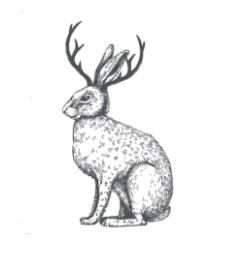
The jackalope is a small creature native to North America. Appearing to be a jack rabbit with deer-like antlers, they are a shy species rarely seen in the wild.
Category: Grasslands/Nocturnal
History
The jackalope is known for confusing and startling travelers in the American West, but rarely appears to seek out humans or other company. They are believed to be the result of a cross between the pygmy deer and the caerbannog rabbit, and cowboys told tales of hearing them call in human voices in the night.
They are a popular animal for taxidermy, due to their unusual appearance, but many of these are fake.
Traits and Behavior
An adult jackalope is a smaller animal, typically around 10-25 pounds. They have brown or grey fur, and white, branching antlers. Jackalope kits often have spots on their back, which they lose during adolescence.
The jackalope is a fast animal, with speeds up to 50 m.p.h. over short distances. They are typically very shy, but can be territorial and vicious during the spring mating season. They use their shorter stature and speed to leap below their predators, goring upwards with their antlers.
Jackalopes live in family groups consisting of the parents, children, grandparents and siblings. The couples typically mate for life, and remain together outside of the mating season for the raising of the kits. They build temporary, seasonal nests in tall grasses and fields, and often return to the same places year after year. This has caused many issues with human settlements, as the jackalope will attempt to return and becomes territorial to newly settled humans and cattle.
Jackalopes are omnivores; they primarily consume plant matter, but can and will hunt small animals or scavenge other predators’ kills. This is particularly common in the spring before mating season, as a way to build strength and muscle prior to their season. Jackalopes preferred prey are small lizards and reptiles, but they will go after smaller rodents and birds if the opportunity presents itself.
The jackalope cannot speak, as some legends claim, but they can make a call that resembles a human scream or shout. They typically do this at night, when they are the most active, as a way of communicating to each other and to scare off other predators.
Weaknesses
The jackalope is a shy animal and will typically run when faced with a human. If threatened, or if in mating season, they will aim to disable the legs first using either their antlers or a jump at the mid-section. To avoid this issue, protection of vital areas and of the calves is advised. Jackalopes are neither immortal or invulnerable, and general weaponry or hunting gear should be sufficient to take one down if needed.
-
Nymphs
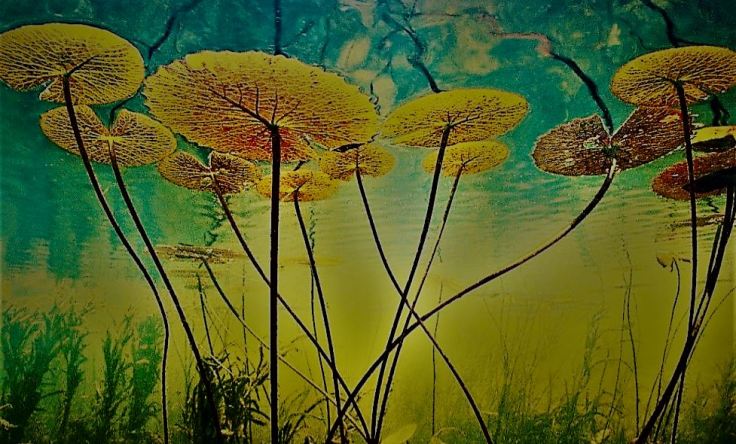
Nymphs, a cousin to the dryad, are nature spirits found in bodies of water. Native primarily to the Mediterranean, they are fierce when provoked.
Category: Aquatic
History
Nymphs are a type of demigod from Greek mythology, nature spirits that represent bodies of water. Nymphs are all female; their male children frequently become heroes or demigods in their own right, female children are born as nymphs.
Traits and Behavior
Nymphs appear as humanoid women in their prime when seen. Their coloration resembles the body of water in which they dwell, and their hair will often appear as seaweed or other plant-life. Nymphs rarely leave their body of water, but can do so if needed. They cannot go more than a few yards away before they begin to dry out, as their bodies consist largely of water. When submerged entirely, many nymphs are bioluminescent.
Unlike some other aquatic creatures, nymphs generally remain close to shore, living in underwater caves or rocky outcroppings. They prefer large groups, often made up of several generations. While long-lived, nymphs are not immortal and their life-span on average ranges between 2-5 centuries. Oceanic nymphs generally live longer, but an increase in pollution plays a roll in lowering their lifespan.
Nymphs have a degree of control over the water, especially the water of their own home. While one nymph may be able to drown one individual using this ability, their true power comes in groups. A group of nymphs can create and control storm systems up to hurricanes and typhoons. They are known to have sunk entire fleets of ships when truly enraged. Despite this, nymphs are typically quick to calm down afterwards and retreat to their dwelling once the storm has passed.
Areas where nymphs reside are difficult to differentiate from unoccupied bodies of water. They will have fresh clear water, minimal to no trash, and there may be spaces cleared for the nymphs to sit above water, but little else. Nymph water has some cleansing and healing factors, depending on the number of nymphs residing in the area. Their waters are usually in remote areas, and are known to make a person uncomfortable if approached or entered. Most report the feeling as foreboding, and the urge to leave the area immediately is common.
Weaknesses
Nymphs will dry out if removed from their body of water for long periods of time, especially in the heat or strong sun. Any water access will temporarily keep them alive, but only their own waters are sufficient for long term survival. A nymph can move their waters, but only through traveling with it, either along a stream or through rain.
Pollution or any damage to their waters ecosystem will cause severe health effects and can eventually cause death. If the nymphs of an area die, their waters will dry out entirely.
Nymphs are at their most dangerous when angered, but are quick to calm. A heartfelt apology will be of some benefit, and they are fond of gifts from inland places they cannot visit if a gift or offering is needed to soothe them. Nymphs are generally angered by trespassers or threats to their waters.
-
Dryads

Dryads are a generally peaceful creature native to the Mediterranean region. They are nature spirits of great strength, but are only dangerous when threatened. Be aware, dryads are not only protective of their trees but of their entire forest in which they dwell
Category: Forest/Diurnal
History
Dryads are considered demigods of Greek mythology, the nymphs that reside specifically within trees as opposed to bodies of water. Traditional dryads are female, and the majority of their legends depict them fleeing from amorous male gods whose ability to understand consent was limited to non-existent. The stories usually end with the dryad taking her tree shape to escape.
Dryads are usually the daughters of more powerful nature spirits, and their children are either female dryads or share their species and appearance with their father. Male dryads are not believed to exist. The male children of dryads are often demigods in their own right, or mortal heroes of legend.
Traits and Behavior
A dryad is both the humanoid form they can take and the tree in which they dwell. Dryads can leave their tree to move around, but they cannot travel far from their tree. A dryad in their humanoid form will appear female, of varying ages depending on the maturity of their tree but rarely younger than adolescence. Younger dryads struggle to maintain form and will revert back to their tree swiftly.
The dryads appearance will vary based on the their type of tree; a willow will appear thin and graceful, an oak strong and solid. Their skin will often resemble bark, and their hair leaves, and the coloration of a dryad will resemble the seasonal colors of their native tree. Skilled dryads can take on a more human appearance, but their coloration will still appear somewhat inhuman. Dryads eyes can range in color but will typically remain brown or green. Fruit tree dryads can have eye colors or markings that resemble their fruit. Eating the fruit of a dryad’s tree can confer luck or the Sight, but if the fruit is taken without permission it will often be toxic or cause severe misfortune.
Dryads have some control over the plants and trees around them in either form, but this ability varies depending on the distance from the tree and the dryad’s strength.
Dryads gather in communities called groves, and are often the daughters and granddaughters of the oldest trees. Even when the oldest dies, the children can use the root system to grow and be strong, and the grove aids each other. Normal trees growing in the area tend to gather some level of energy from the vicinity, and their wood can create powerful spells.
A dryad tree will not truly differ in appearance from a regular tree, though it may be in better health than its surroundings would suggest. Approaching a dryad tree will often instill a feeling of distraction, and an urge to leave the area is common. Harming the tree in any way will cause bad luck to follow you, if you are able to leave the grove; remember, the trees surrounding a dryad tree are often also dryads. Even the regular trees can be manipulated by the dryads to trap the person, until they lose themselves in the woods. Dryad wood when cut will never sink, but it will lead any who use it to their deaths. When a dryad dies, their grove will allow them to return to the ground naturally, and so even dead dry wood from a dryad will curse any who take it. If a dryad willingly provider her branches however, the person will be blessed with good fortune.
Dryad trees do often appear to have faces in the bark, more often than regular trees. This is more often the case if the dryad has any dead bodies below their roots. Their bark often takes a reddish hue until decomposition is complete.
Weaknesses
Dryads in their tree form can be cut down or damaged the same as regular trees, if they aren’t able to chase off the person with confusion or using the surrounding trees to damage others. They are slightly less susceptible to fire than regular living trees, but they will burn if the fire is hot enough or if they are exposed long enough.
Dryads in their humanoid form have tougher skin than the average human, but they can be physically harmed with standard weapons. Forcing a dryad away from their tree will significantly weaken them and can even kill them. A weak dryad will struggle to control their form and will often become more tree-like in appearance. They will also lose their control over plant life, but the surrounding flora may go wild in growth and movement. If the humanoid form dies, the tree will also die, and the humanoid body will disappear.
If the tree itself becomes ill, such as with insects or physical damage, the dryad will also be ill. These things can kill the dryad the same as a normal tree, but the dryad will be hardier than their tree equivalent.
-
Will-o’-the-Wisp
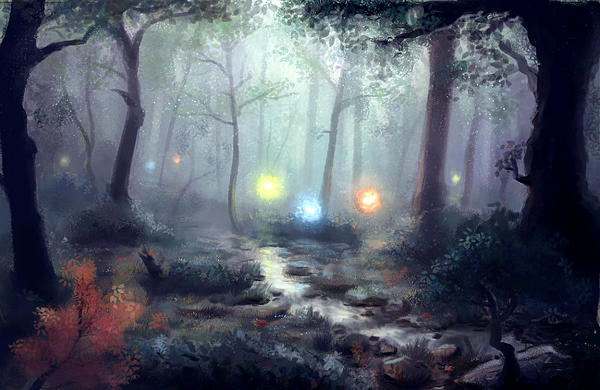
The Will-o’-the-Wisp is an unusual creature hailing from the British Isles. Appearing from a distance as a floating lantern light, they are famous for drawing travelers to their deaths, lost and alone.
Category: Nocturnal
History
The Will-o’-the-Wisp does not have a set history, as in many cases it appears as an illusion. They show themselves late at night, appearing from a distance and never up close. Travelers that follow them will find themselves hopelessly lost in the woodlands or bogs, and few are ever seen again. Whether the wisps truly intend to lead anyone anywhere, to their deaths or otherwise, is unclear.
Many legends consider the creature a lost soul, trapped between heaven and hell with nowhere to go. Left on earth, they wander lost places and may seek company in the ones they’ve led astray.
Traits and Behavior
The Will-o’-the-Wisp is usually only seen from afar, where it appears to be the bobbing light of a candle or lantern. They retreat when approached, leading anyone following them further and further into the darkness. Travelers often mistake them for another person wandering in the night, and follow for the hope of aid or company. Looking at their light is known to cause comfort and calm in people.
Up close, the wisp is a point of light, around the size of a fist, and floats aimlessly at around shoulder height. In the light of day, or if exposed to light such as a campfire or torch, the wisp will become all but invisible, and appear as a small patch of haze similar to a mirage. In large groups they appear in a multitude of colors, but alone they generally share the color of a candle flame.
Wisps are usually seen alone at first, then multiply as one follows them further. This seems to indicate that they naturally gather in more remote areas, so as a traveler follows one further from the safety of roads and towns, their numbers will appear to increase.
Wisps are sometimes believed to be lost souls; they appear in greater numbers in places that have seen death. Their comforting glow may play into the idea that they are a loved one lingering in the area.
Wisps are also known to show up in places where magic or other supernatural activity has occurred; they may be drawn to the area or they could be born there. Their life span or what causes them to appear is not known.
They will avoid heavily populated places, and only linger near the outskirts of civilization. Some believe seeing one is an omen of death or calamity; others believe that following one will lead to treasure. Given many treasures have been fought and killed over, and wisps propensity to linger in places of death, both may be accurate.
Weaknesses
Will-o’-the-wisps, as stated, do not appear to directly threaten travelers so much as lead them astray through their light into the dark. The best way to avoid their influence is to travel in groups, and to stay on traveled paths.
Their calming influence can draw one into a state of distraction, so be alert and wary to anyone suggesting to follow the light, no matter who has suggested it. If in doubt, insist on not traveling until the morning, and do not follow travelers in the night that have not verbally responded no matter the emergency. Wisps are not known to imitate human speech, so a lack of response can be a clear indicator that you are not facing a human.
Of course, there are other creatures in the night that are more equipped for trickery, and they are not so easily thwarted.
-
Vampires

The vampire is one of the most feared and dangerous of the supernatural creatures. A creature of deadly grace and fierce intelligence.
Category: Nocturnal/Undead
History
The common vampire hails from eastern Europe and holds a place in a wide number of myths. The most popular variation can be tied to the tale of Dracula, an ancient vampire from Romania with immense power.
The oldest of vampire myths view them as a creature born after the death of a human, the body raising itself from the grave to attack its’ former friends and family. They must consume the blood of the living to continue on existing, and seek no other resource. Some early stories account the natural changes of a decomposing body, such as the swelling from gases or ‘growth’ of hair and nails (caused by skin shrinking) as signs that the body has continued to change and live after its’ apparent death. The victims would feel lethargic, ill, and depending on the myth may rise as a vampire themselves.
Traits and Behavior
The vampire’s most basic trait is the consumption of human blood, which is its’ only food source. The vampire needs only blood to remain ‘healthy.’
Vampires are the reanimated corpse of a human, infected prior to death. The most common form of infection is via the vampire’s bite; typically the vampire must feed upon the human, and then allow the human to drink its’ blood, to achieve the transformation. Once changed, the physical transformation is immediate.
Vampires have pale skin, elongated and sharpened canines and often have red or yellow eyes. They can see in the dark and have heightened senses, strength and speed. In addition, some vampires have the ability to mesmerize anyone that looks directly in their eyes for any length of time. They otherwise will physically appear human, but a number of traits may be noticed if one pays close attention.
The second major trait of the vampire is that they are effectively immortal. Unless directly killed, they may live on forever. They do age, but at a far slower rate than that of humans, and therefore may be identified by how long they have gone without any clear indication of aging.
Vampires do not appear on any surface treated with silver, hence the old superstition of them not appearing in mirrors. Any mirror that is made of a silver surface will not show a vampire, and any photos that were developed in silver nitrate will also not show the vampire. More modern methods can display a vampire, as cheaper mirrors now use aluminum and digital cameras do not use silver.
A vampire has no need to eat besides blood, and they do not need to breathe. A human that does not appear to breathe may well be a vampire or other supernatural creature, although plenty learn to fake the behavior. A vampire may physically ingest food but will be ill from it, so most will refrain. Liquids do not cause the same issues, but offer no nutritional value.
A vampire’s eyes will often react to light much stronger than the normal human’s, as they are nocturnal. A strong flash of light will likely be startling and cause temporary blindness; as this is also common in humans, this reaction may not be a clear indicator.
Vampires are naturally solitary, and rarely form large groups. Many will live alone, and will prefer a home that is secluded. Many gravitate towards older constructions and stone buildings, though whether the preference is due to the layout of said buildings or based on the material is unclear. Due to their immortality, many vampires avoid interacting with humans outside of seeking out prey.
Vampires often speak in formal tones, and will frequently have a slight lisp. This is due to their fangs, which cause some difficulties in human speech. Vampires do not have their own language, but they do make a number of sounds not audible to human ears to communicate with each other. Werewolves and other enhanced species can hear these sounds, but rarely use them to communicate.
To feed, the vampire will bite the human, typically near a large artery to increase blood flow. Their fangs carry a natural numbing agent to minimize pain, and their saliva will cause the wounds to clot at a faster rate once the fangs have been removed from the skin. A human after being fed on will feel lethargic but will face no other repercussions outside of what is normal for blood loss; if you have been bitten, consumption of liquids and sugar will help the immediate shock, and rest should resolve any remaining issues. A human can be killed from being fed on, due to blood loss, but no other symptoms should present.
The creation of a new vampire requires the human in question to drink the blood of a vampire, then be bitten. The combination of the numbing agent of the fangs interacting with the blood of the vampire will trigger the transformation. The process is not a guarantee, as the blood loss can kill the human in question before they fully transform. Should it be a success, the human will become a vampire within hours. It will be imperative for the vampire to feed immediately upon transformation, as their new body needs a great deal of blood after the transformation. Afterwards, they will need to feed frequently for the first few years, up until at least their first decade. Older vampires do not need to feed as often, and can go months or even years between. A feeding does not need to be the full blood volume of a human, but it is noted that doing so will result in a much longer time before they need to feed again.
The blood does not need to be human, but it seems that human blood is significantly more sustaining. An equal amount of blood from another animal can be less than half as effective. Vampires can feed on other supernatural creatures as well, with those feedings being slightly more effective than animals, but less so than human. This is possibly due to something unique about human blood, or perhaps related to the vampire previously being human. There are no known cases of a supernatural creature becoming a vampire, and it is unclear if this is impossible or merely very unlikely. Vampires will not drink another vampire’s blood unless absolutely necessary; it will keep them from starvation, but it causes extreme physical reactions and illness.
As a vampire ages, they can develop a series of secondary powers. These will not generally show up until their first century at the earliest. These powers can vary, but the most common is the ability to shapeshift. Bats are a common form, as is a fully black wolf, and a fog bank. Other forms are rare but possible; it does not seem the vampire themselves has control of which they develop.
There can also be an increase in their natural abilities to mesmerize, growing into the ability to temporarily control others, and increasing in strength to the point it can effect other supernatural creatures. An older vampire will be slower than a younger vampire, however, and their strength will stagnate. This does not mean an older vampire is an easier target; older vampires will be physically tougher than a young one, their skin and flesh hardening to the point that very few weapons will easily penetrate.
Weaknesses
Vampires are most susceptible to daylight; direct light on their skin will cause immediate burning, and a few minutes of exposure will burn them to ash. Burns caused by the sun will take longer to heal and cause scarring, one of the few ways to permanently mark a vampire. Older vampires will last slightly longer than young ones, but they will not survive long.
To kill a vampire without sunlight, they need to be stabbed through the heart with a wooden stake, then beheaded. Burning the body after this is recommended; sunlight will not incinerate the body if the vampire is already dead, so actual fire needs to be utilized. The wooden stake used to stab the vampire should be made from oak, ash or birch to be more effective, and can be rubbed down with garlic or rose oil. The beheading does not need specific materials, but silver is traditional for the blade.
Vampires can be repelled by either wild rose blooms or garlic flowers. The best method would be to weave a wreath or garland and situate them around what you wish to protect. The flowers are more potent fresh, but dried blossoms will be somewhat effective depending on the vampire’s age.
Vampires cannot easily cross running water; it will cause severe pain and even repel younger vampires. Even shape shifted vampires will face this issue. They can do so if surrounded by grave dirt, but there needs to be a large volume of soil to be effective. It is unknown what would occur to a vampire trapped in the middle of running water such as the ocean. It is not recommended to try this method.
Some vampires, older ones especially, feel a compulsion to count and sort items around them. Throwing a bag of small seeds onto the ground can cause some vampires to feel the need to count each one, and this can be used to escape. A vampire caught in the compulsion will continue even if the sun is rising, but not all vampires are susceptible to this.
Vampires cannot enter a private dwelling without express permission from the owner of the property. Be aware, though, that there are issues with this method. An apartment is owned by the person who lives there, not the one who owns the building, but the hallways and common areas belong to the landowner. If the property belongs to no-one but is lived in, the residents have to welcome the vampire in. Public spaces, even hotels, qualify as public space and therefore do not require an invitation. A welcome mat or sign outside can represent an implicit welcome. An invitation can be rescinded, but there is no guarantee the vampire will have to leave immediately if they are already inside.
 The Creature Compendium